Kieler Militia Supply is here to educate the masses on their rights and help shed light on firearms. We are here to support the "Unorganized Militia" and "Organized Militia". --“I ask who are the militia? They consist now of the whole people, except a few public officers.” – George Mason, Address to the Virginia Ratifying Convention, June 4, 1788

Translate

Thursday, November 5, 2020

Joe Biden’s So-Called “Gun Safety” Plan Explained

 Sourced from GOA https://gunowners.org/na10312020/

Joe Biden’s So-Called “Gun Safety” Plan Explained

For the last four years we have had a Republican President in the White House. As in decades past, Republicans muddled with the NICS system and failed to defend bump stocks. But had Hillary Clinton won, gun owners would have suffered many more losses than this.
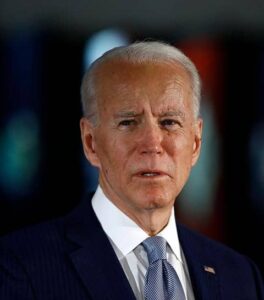
Joe Biden

However, Gun Owners of America was able to achieve many policy goals under the Trump Administration.

We detailed that in an article titled: Ten Wins for Gun Owners Under the Trump Administration. But our victories will not survive a Biden-Harris Administration.

Imagine the destruction that will be caused by an Administration that refuses to acknowledge that the Second Amendment protects an individual right. Or a President who believes that’s it’s okay to confiscate millions of commonly-owned firearms.

That’s what we are facing if Joe Biden wins the 2020 Presidential Election.

The following contains quotations directly from the Joe Biden gun control proposal. I will contextualize each proposed infringement.

Semi-automatic Gun and Magazine Bans and Confiscation

Federal Gun Bans and Magazine Bans to be enforced by Robert Francis Take your AR-15 O’Rourke:

Ban the manufacture and sale of assault weapons and high-capacity magazines. Federal law prevents hunters from hunting migratory game birds with more than three shells in their shotgun. That means our federal law does more to protect ducks than children. It’s wrong. Joe Biden will enact legislation to once again ban assault weapons. This time, the bans will be designed based on lessons learned from the 1994 bans. For example, the ban on assault weapons will be designed to prevent manufacturers from circumventing the law by making minor changes that don’t limit the weapon’s lethality. While working to pass this legislation, Biden will also use his executive authority to ban the importation of assault weapons.

Mandatory gun and magazine registration, if you can afford it as each firearm or magazine will require a separate $200 NFA tax stamp:

Regulate possession of existing assault weapons under the National Firearms Act. Currently, the National Firearms Act requires individuals possessing machine-guns, silencers, and short-barreled rifles to undergo a background check and register those weapons with the Bureau of Alcohol, Tobacco, Firearms and Explosives (ATF). Due to these requirements, such weapons are rarely used in crimes. As president, Biden will pursue legislation to regulate possession of existing assault weapons under the National Firearms Act.

Mandatory gun confiscation:

Buy back the assault weapons and high-capacity magazines already in our communities. Biden will also institute a program to buy back weapons of war currently on our streets. This will give individuals who now possess assault weapons or high-capacity magazines two options: sell the weapons to the government, or register them under the National Firearms Act.

Prepare to ban the manufacture of all guns except so-called “smart guns:”

Put America on the path to ensuring that 100% of firearms sold in America are smart guns. Today, we have the technology to allow only authorized users to fire a gun. For example, existing smart gun technology requires a fingerprint match before use. Biden believes we should work to eventually require that 100% of firearms sold in the U.S. are smart guns. But, right now the NRA and gun manufacturers are bullying firearms dealers who try to sell these guns. Biden will stand up against these bullying tactics and issue a call to action for gun manufacturers, dealers, and other public and private entities to take steps to accelerate our transition to smart guns.

Strip the firearm and ammunition industry of civil liability protections and hold manufacturers, engaged in lawful commerce, liable for criminals engaging in criminal activity:

Hold gun manufacturers accountable. In 2005, then-Senator Biden voted against the Protection of Lawful Commerce in Arms Act, but gun manufacturers successfully lobbied Congress to secure its passage. This law protects these manufacturers from being held civilly liable for their products – a protection granted to no other industry. Biden will prioritize repealing this protection.

Ban the purchase of more than one firearm per month at the federal level:

Reduce stockpiling of weapons. In order to reduce the stockpiling of firearms, Biden supports legislation restricting the number of firearms an individual may purchase per month to one.

Universal Background [Registration] Checks

Bribe states to create licenses to purchase firearms using federal tax dollars:

Give states incentives to set up gun licensing programs. Biden will enact legislation to give states and local governments grants to require individuals to obtain a license prior to purchasing a gun.

References about UBCs that are reminiscent of the leaked Obama-Biden Administration’s NIJ memo that said “Effectiveness depends on the ability to reduce straw purchasing, requiring gun registration” (emphasis added):

Keep guns out of dangerous hands. The federal background check system (the National Instant Criminal Background Check System) is one of the best tools we have to prevent gun violence, but it’s only effective when it’s used. Biden will enact universal background check legislation and close other loopholes that allow people who should be prohibited from purchasing firearms from making those purchases. Specifically, he will:

End the private sale of firearms, except for gifts to immediate family… for now:

Require background checks for all gun sales. Today, an estimated 1 in 5 firearms are sold or transferred without a background check. Biden will enact universal background check legislation, requiring a background check for all gun sales with very limited exceptions, such as gifts between close family members. This will close the so-called “gun show and online sales loophole” that the Obama-Biden Administration narrowed, but which cannot be fully closed by executive action alone.

Banning the sale of guns, ammo, and gun parts online:

End the online sale of firearms and ammunitions [sic]. Biden will enact legislation to prohibit all online sales of firearms, ammunition, kits, and gun parts.

Enact a Homemade Gun Ban.

Stop “ghost guns.” One way people who cannot legally obtain a gun may gain access to a weapon is by assembling a one [sic] on their own, either by buying a kit of disassembled gun parts or 3D printing a working firearm. Biden will stop the proliferation of these so-called “ghost guns” by passing legislation requiring that purchasers of gun kits or 3D printing code pass a federal background check.

Even more funding for the Universal Background Check System:

Adequately fund the background check system. President Obama and Vice President Biden expanded incentives for states to submit records of prohibited persons into the background checks system. As president, Biden will continue to prioritize that funding and ensure that the FBI is adequately funded to accurately and efficiently handle the NICS system.

Regulate what gun owners can and cannot do with their property in the privacy of their own homes:

Require gun owners to safely store their weapons. Biden will pass legislation requiring firearm owners to store weapons safely in their homes.

Prosecute gun owners for the new “crime” of teaching a minor how to safely handle a firearm or how to shoot or hunt with a firearm:

Hold adults accountable for giving minors access to firearms. Biden supports legislation holding adults criminally and civilly liable for directly or negligently giving a minor access to a firearm, regardless of whether the minor actually gains possession of the firearm.

More funding to prosecute NICS denials:

Prioritize prosecution of straw purchasers. “Straw purchasers” buy a firearm on behalf of an individual who cannot pass a background check. Biden will end those loopholes by enacting a law to make all straw purchases a serious federal crime and ensure the U.S. Justice Department has sufficient resources to prioritize their prosecution.

Funding to send police after NICS denials, again, 95% of which are law abiding citizens who received “false positive” denials from the FBI:

Notify law enforcement when a potential firearms purchaser fails a background check. Too often, when prohibited persons attempting to buy a firearm fail a background check, state and local law enforcement is never informed of the attempt. As president, Biden will direct the FBI to set up a process to ensure timely notification of denials to state and local law enforcement, and he’ll support legislation to codify this process. This empowers law enforcement to follow up and ensure prohibited persons do not attempt to acquire firearms through other means.

Prosecute gun owners when a criminal steals their firearm or when they “lose” a firearm for failure to file a police report:

Require firearms owners to report if their weapon is lost or stolen. Responsible gun owners have a responsibility to inform law enforcement if their weapon is lost or stolen. Biden will enact legislation to make this the law of the land.

New “Boyfriend Loophole” Gun Ban, which includes special federal Gun Confiscation Orders for those convicted of “stalking” because they threatened a pet:

Close other loopholes in the federal background check system. In addition to closing the “boyfriend loophole” highlighted below […]

New “Hate Crime Loophole” Gun Ban, which includes a gun ban for referring to someone as an “illegal alien” in New York City:

Close the “hate crime loophole.” Biden will enact legislation prohibiting an individual “who has been convicted of a misdemeanor hate crime, or received an enhanced sentence for a misdemeanor because of hate or bias in its commission,” from purchasing or possessing a firearm.

Eliminate a three-business day deadline for the FBI to complete a NICS check, creating a potential 10 day waiting period for firearm purchases:

Close the “Charleston loophole.” The Charleston loophole allows people to complete a firearms purchase if their background check is not completed within three business days. Biden supports the proposal in the Enhanced Background Checks Act of 2019, which extends the timeline from three to 10 business days. Biden will also direct the Federal Bureau of Investigation (FBI) to put on his desk within his first 100 days as president a report detailing the cases in which background checks are not completed within 10 business days and steps the federal government can take to reduce or eliminate this occurrence.

Further Gun Confiscation Legislation at the Federal, State, and Local Levels

Increase prosecution of NICS denials, 95% of which are law-abiding citizens who received “false positive” denials from the FBI:

Create an effective program to ensure individuals who become prohibited from possessing firearms relinquish their weapons. Federal law defines categories of individuals who are prohibited from purchasing or possessing firearms, and the federal background check system is an effective tool for ensuring prohibited persons cannot purchase firearms. But we lack any serious tool to ensure that when someone becomes newly prohibited – for example, because they commit a violent crime – they relinquish possession of their firearms. There are some promising models for how this could be enforced. For example, California has a mandatory process for ensuring relinquishment by any individual newly subject to a domestic violence restraining order. As president, Biden will direct the FBI and ATF to outline a model relinquishment process, enact any necessary legislation to ensure relinquishment when individuals newly fall under one of the federal prohibitions, and then provide technical and financial assistance to state and local governments to establish effective relinquishment processes on their own.

Bribe states to enact ex parte Gun Confiscation Orders with no due process using federal tax dollars:

Incentivize state “extreme risk” laws. Extreme risk laws, also called “red flag” laws, enable family members or law enforcement officials to temporarily remove an individual’s access to firearms when that individual is in crisis and poses a danger to themselves or others. Biden will incentivize the adoption of these laws by giving states funds to implement them. And, he’ll direct the U.S. Department of Justice to issue best practices and offer technical assistance to states interested in enacting an extreme risk law.

Executive Action

Reinstate the Social Security Gun Ban:

Reinstate the Obama-Biden policy to keep guns out of the hands of certain people unable to manage their affairs for mental reasons, which President Trump reversed. In 2016, the Obama-Biden Administration finalized a rule to make sure the Social Security Administration (SSA) sends to the background check system records that it holds of individuals who are prohibited from purchasing or possessing firearms because they have been adjudicated by the SSA as unable to manage their affairs for mental reasons. But one of the first actions Donald Trump took as president was to reverse this rule. President Biden will enact legislation to codify this policy.

Perpetuate an ineffective and unconstitutional ban on sharing 3D printed gun files online:

Biden will ensure that the authority for firearms exports stays with the State Department, and if needed, reverse a proposed rule by President Trump. This will ensure the State Department continues to block the code used to 3D print firearms from being made available on the Internet.

“Enforcing the laws we already have” against law-abiding gun owners, such as executive action to continue banning pistol-braced firearms and re-designating them as Short Barreled Rifles or Any Other Weapons:

Reform, fund, and empower the U.S. Justice Department to enforce our gun laws. Biden will direct his Attorney General to deliver to him within his first 100 days a set of recommendations for restructuring the ATF and related Justice Department agencies to most effectively enforce our gun laws. Biden will then work to secure sufficient funds for the Justice Department to effectively enforce our existing gun laws, increase the frequency of inspections of firearms dealers, and repeal riders that get in the way of that work.


Each President sets the tone for their Presidency by achieving as many policy goals as they can in their first 100 days in office. For gun owners, this is bad news. Using the laws that we already have, a Biden-Harris Administration can wreak havoc on gun owners without any new acts of Congress. Still, Joe Biden and Kamala Harris promise much worse for gun owners.

From gun and magazine bans, licenses to purchase firearms, universal registration checks, and gun confiscation without due process, a Biden-Harris Administration promises four years of unrelenting efforts to infringe on the rights of gun owners.

Keep in mind, this list is far from exhaustive of what Joe Biden has promised he will do.

Of course, Gun Owners of America will defend your right to keep and bear arms through our lobbying efforts in Washington D.C. and our legal efforts in the courts regardless of who wins the 2020 Presidential and Congressional elections.

However, it is every American’s duty to support the Constitution and our Second Amendment-recognized rights at the polls in every election.

So, get out there and defend your Second Amendment-protected rights!

Even if you have voted, please share this voter guide with your pro-gun friends and family before they get to the voting booth.

Remember: Every … Vote … Counts.

Monday, November 2, 2020

Joe Biden going to Ban your ability to defend yourself

 Joe Biden going to Ban your ability to defend yourself


I live in a drug and gang enforcement zone and I have called 911 on numerous occasions. The response time for police in town will never be fast enough and yes capacity matters. Joe Biden's comments in the past on a shotgun for defense shows he is completely clueless. It's never just 1 on 1 with criminals these days it's numerous criminals at once. An assault by 3 or more in many cases. Hi capacity mags are justified when you need to defend your family and community. 

When Joe Biden talks about reclassifying Rifles and throwing a basic semi auto rifle and accessories under the NFA he is talking about making them subject to a 200.00 dollar unconstitutional tax on your rights and if you can't afford it well he wants to confiscate your firearm or label and honest law abiding and working citizen as a felon. This is an attack on your Bill of Rights and the NFA should be repealed as it stands it is an unconstitutional restriction on your rights. 


Tuesday, October 27, 2020

Joe Biden was knowing participant in China Dealings while VP

Joe Biden was a willing and knowing participant while being VP

You can change your vote if needed. 

https://www.dailydot.com/debug/how-to-change-early-vote/

Vote for Liberty and Freedom this year, Vote Trump. Your rights and liberty do depend on it. 


Sunday, October 25, 2020

DIY Steel Target Ideas


DIY Steel Targets Ideas

 DIY Steel Target Popper


Auto reset targets

 part 1


 Part 2


Simple Target Stands Made From Conduit


Friday, October 23, 2020

2nd US Presidential Debate

 2nd US Presidential Debate


80 Percent Home built Hand Gun


California is trying to Regulate 80% kits by suing ATF and add additional costs and regulation to home gunsmithing, which ATF has for a long time considered 80% receivers as paperweights essentially due to them being nonfunctional and requiring machining to finish and make operable. Contact your politicians and express support for keeping these unregulated. 

These guns take from a few hours to many hours to complete. They also require additional costs of tools required to do the job. They are easy to screw up if you don't take your time which results in an unusable hunk of Polymer or Aluminum. I assisted a neighbor with building one and it took over 8 hrs to mill and fully assemble. Most of these politicians who push for these controls have absolutely no clue about the actual process. 


80 Percent Home built Hand Gun. How to build and what to expect. 
Polymer 80 Home built Glock
Go slow and take your time!
PF940 Glock 17 upper

Detailed instructions on Polymer 80 brand build


SS80 Developed by the Glock Store Part 1 


SS80 Developed by the Glock Store Part 2

SS80 Developed by the Glock Store Part 3


Friday, September 25, 2020

Election Tampering has started with Throwing Military Votes in the Trash

            Election Tampering has started with Throwing Military Votes in the Trash. Check this article out.

https://pjmedia.com/election/matt-margolis/2020/09/24/military-ballots-found-in-the-trash-in-pennsylvania-all-were-trump-votes-n964614 

Also in the Crucial Swing state of Wisconsin:

Wisconsin authorities investigate trays of mail, absentee ballots found in ditch
FOX News ^ | By Vandana Rambaran

Posted on 9/24/2020, 11:53:57 AM by Red Badger

Police are investigating how three trays of mail, including absentee ballots, ended up in a ditch in Wisconsin, a swing state whose voters could prove crucial in the upcoming elections.

The Outagamie County Sheriff's Office said the mail was found around 8 a.m. Tuesday morning near a highway and was immediately returned to the U.S. Postal Service, Fox 11 reported.

"The United States Postal Inspection Service immediately began investigating and we reserve further comment on this matter until that is complete," USPS spokesman Bob Sheehan said in a statement.

The incident comes a mere five weeks before the presidential election, which has been steeped in partisan bickering over the system of mail-in and absentee ballots and wavering trust in the alternate system.

Due to the coronavirus pandemic, which marked a grim milestone this week of over 200,000 deaths in the U.S., voters are expected to cast ballots by mail in record numbers.

“We expect more than 3 million Wisconsin residents to vote in the November election, which means even more first-time absentee by mail voters,” Meagan Wolfe, the elections commission’s administrator, said in a statement earlier this month.

Wolfe said that before the pandemic, only about 6% of Wisconsin voters cast an absentee ballot by mail. During the state's presidential preference primaries in April, that number jumped to 60% when 1.1 million of the 1.55 million votes were absentee by mail. During the partisan primary in August, Wolfe said approximately 82% of the 867,000 votes cast were absentee, either by mail or in the clerk’s office.

(Excerpt) Read more at foxnews.com ...

https://www.foxnews.com/politics/mail-absentee-ballots-found-wisconsin-ditch

Sunday, September 13, 2020

47 U.S. Code section 230 of the Communications Decency Act

Section 230 of the Communications Decency Act

47 U.S. Code § 230 - Protection for private blocking and screening of offensive material

(a) FindingsThe Congress finds the following:
(1)
The rapidly developing array of Internet and other interactive computer services available to individual Americans represent an extraordinary advance in the availability of educational and informational resources to our citizens.
(2)
These services offer users a great degree of control over the information that they receive, as well as the potential for even greater control in the future as technology develops.
(3)
The Internet and other interactive computer services offer a forum for a true diversity of political discourse, unique opportunities for cultural development, and myriad avenues for intellectual activity.
(4)
The Internet and other interactive computer services have flourished, to the benefit of all Americans, with a minimum of government regulation.
(5)
Increasingly Americans are relying on interactive media for a variety of political, educational, cultural, and entertainment services.
(b) PolicyIt is the policy of the United States
(1)
to promote the continued development of the Internet and other interactive computer services and other interactive media;
(2)
to preserve the vibrant and competitive free market that presently exists for the Internet and other interactive computer services, unfettered by Federal or State regulation;
(3)
to encourage the development of technologies which maximize user control over what information is received by individuals, families, and schools who use the Internet and other interactive computer services;
(4)
to remove disincentives for the development and utilization of blocking and filtering technologies that empower parents to restrict their children’s access to objectionable or inappropriate online material; and
(5)
to ensure vigorous enforcement of Federal criminal laws to deter and punish trafficking in obscenity, stalking, and harassment by means of computer.
(c) Protection for “Good Samaritan” blocking and screening of offensive material
(1) Treatment of publisher or speaker
No provider or user of an interactive computer service shall be treated as the publisher or speaker of any information provided by another information content provider.
(2) Civil liabilityNo provider or user of an interactive computer service shall be held liable on account of—
(A)
any action voluntarily taken in good faith to restrict access to or availability of material that the provider or user considers to be obscene, lewd, lascivious, filthy, excessively violent, harassing, or otherwise objectionable, whether or not such material is constitutionally protected; or
(B)
any action taken to enable or make available to information content providers or others the technical means to restrict access to material described in paragraph (1).[1]
(d) Obligations of interactive computer service
A provider of interactive computer service shall, at the time of entering an agreement with a customer for the provision of interactive computer service and in a manner deemed appropriate by the provider, notify such customer that parental control protections (such as computer hardware, software, or filtering services) are commercially available that may assist the customer in limiting access to material that is harmful to minors. Such notice shall identify, or provide the customer with access to information identifying, current providers of such protections.
(e) Effect on other laws
(1) No effect on criminal law
Nothing in this section shall be construed to impair the enforcement of section 223 or 231 of this title, chapter 71 (relating to obscenity) or 110 (relating to sexual exploitation of children) of title 18, or any other Federal criminal statute.
(2) No effect on intellectual property law
Nothing in this section shall be construed to limit or expand any law pertaining to intellectual property.
(3) State law
Nothing in this section shall be construed to prevent any State from enforcing any State law that is consistent with this section. No cause of action may be brought and no liability may be imposed under any State or local law that is inconsistent with this section.
(4) No effect on communications privacy law
Nothing in this section shall be construed to limit the application of the Electronic Communications Privacy Act of 1986 or any of the amendments made by such Act, or any similar State law.
(5) No effect on sex trafficking lawNothing in this section (other than subsection (c)(2)(A)) shall be construed to impair or limit—
(A)
any claim in a civil action brought under section 1595 of title 18, if the conduct underlying the claim constitutes a violation of section 1591 of that title;
(B)
any charge in a criminal prosecution brought under State law if the conduct underlying the charge would constitute a violation of section 1591 of title 18; or
(C)
any charge in a criminal prosecution brought under State law if the conduct underlying the charge would constitute a violation of section 2421A of title 18, and promotion or facilitation of prostitution is illegal in the jurisdiction where the defendant’s promotion or facilitation of prostitution was targeted.
(f) DefinitionsAs used in this section:
(1) Internet
The term “Internet” means the international computer network of both Federal and non-Federal interoperable packet switched data networks.
(2) Interactive computer service
The term “interactive computer service” means any information service, system, or access software provider that provides or enables computer access by multiple users to a computer server, including specifically a service or system that provides access to the Internet and such systems operated or services offered by libraries or educational institutions.
(3) Information content provider
The term “information content provider” means any person or entity that is responsible, in whole or in part, for the creation or development of information provided through the Internet or any other interactive computer service.
(4) Access software providerThe term “access software provider” means a provider of software (including client or server software), or enabling tools that do any one or more of the following:
(A)
filter, screen, allow, or disallow content;
(B)
pick, choose, analyze, or digest content; or
(C)
transmit, receive, display, forward, cache, search, subset, organize, reorganize, or translate content.
(June 19, 1934, ch. 652, title II, § 230, as added Pub. L. 104–104, title V, § 509, Feb. 8, 1996, 110 Stat. 137; amended Pub. L. 105–277, div. C, title XIV, § 1404(a), Oct. 21, 1998, 112 Stat. 2681–739; Pub. L. 115–164, § 4(a), Apr. 11, 2018, 132 Stat. 1254.)

DEPARTMENT OF JUSTICE’S REVIEW OF SECTION 230 OF THE COMMUNICATIONS DECENCY ACT OF 1996

DEPARTMENT OF JUSTICE’S REVIEW OF SECTION 230 OF THE COMMUNICATIONS DECENCY ACT OF 1996

As part of its broader review of market-leading online platforms, the U.S. Department of Justice analyzed Section 230 of the Communications Decency Act of 1996, which provides immunity to online platforms from civil liability based on third-party content and for the removal of content in certain circumstances.  Congress originally enacted the statute to nurture a nascent industry while also incentivizing online platforms to remove content harmful to children.  The combination of significant technological changes since 1996 and the expansive interpretation that courts have given Section 230, however, has left online platforms both immune for a wide array of illicit activity on their services and free to moderate content with little transparency or accountability.
The Department of Justice has concluded that the time is ripe to realign the scope of Section 230 with the realities of the modern internet.  Reform is important now more than ever.  Every year, more citizens—including young children—are relying on the internet for everyday activities, while online criminal activity continues to grow.  We must ensure that the internet is both an open and safe space for our society.  Based on engagement with experts, industry, thought-leaders, lawmakers, and the public, the Department has identified a set of concrete reform proposals to provide stronger incentives for online platforms to address illicit material on their services, while continuing to foster innovation and free speech. Read the Department’s Key Takeaways.
Hide Read More

The Department's review of Section 230 arose in the context of our broader review of market-leading online platforms and their practices, announced in July 2019.  While competition has been a core part of the Department’s review, we also recognize that not all concerns raised about online platforms (including internet-based businesses and social media platforms) fall squarely within the U.S. antitrust laws.  Our review has therefore looked broadly at other legal and policy frameworks applicable to online platforms.  One key part of that legal landscape is Section 230, which provides immunity to online platforms from civil liability based on third-party content as well as immunity for removal of content in certain circumstances.
Drafted in the early years of internet commerce, Section 230 was enacted in response to a problem that incipient online platforms were facing.  In the years leading up to Section 230, courts had held that an online platform that passively hosted third-party content was not liable as a publisher if any of that content was defamatory, but that a platform would be liable as a publisher for all its third-party content if it exercised discretion to remove any third-party material. Platforms therefore faced a dilemma:  They could try to moderate third-party content but risk being held liable for any and all content posted by third parties, or choose not to moderate content to avoid liability but risk having their services overrun with obscene or unlawful content.  Congress enacted Section 230 in part to resolve this quandary by providing immunity to online platforms both for third-party content on their services or for removal of certain categories of content.  The statute was meant to nurture emerging internet businesses while also incentivizing them to regulate harmful online content.
The internet has changed dramatically in the 25 years since Section 230’s enactment in ways that no one, including the drafters of Section 230, could have predicted.  Several online platforms have transformed into some of the nation’s largest and most valuable companies, and today’s online services bear little resemblance to the rudimentary offerings in 1996.  Platforms no longer function as simple forums for posting third-party content, but instead use sophisticated algorithms to promote content and connect users.  Platforms also now offer an ever-expanding array of services, playing an increasingly essential role in how Americans communicate, access media, engage in commerce, and generally carry on their everyday lives.
These developments have brought enormous benefits to society.  But they have also had downsides.  Criminals and other wrongdoers are increasingly turning to online platforms to engage in a host of unlawful activities, including child sexual exploitation, selling illicit drugs, cyberstalking, human trafficking, and terrorism.  At the same time, courts have interpreted the scope of Section 230 immunity very broadly, diverging from its original purpose.  This expansive statutory interpretation, combined with technological developments, has reduced the incentives of online platforms to address illicit activity on their services and, at the same time, left them free to moderate lawful content without transparency or accountability.  The time has therefore come to realign the scope of Section 230 with the realities of the modern internet so that it continues to foster innovation and free speech but also provides stronger incentives for online platforms to address illicit material on their services.
Much of the modern debate over Section 230 has been at opposite ends of the spectrum.  Many have called for an outright repeal of the statute in light of the changed technological landscape and growing online harms.  Others, meanwhile, have insisted that Section 230 be left alone and claimed that any reform will crumble the tech industry.  Based on our analysis and external engagement, the Department believes there is productive middle ground and has identified a set of measured, yet concrete proposals that address many of the concerns raised about Section 230.
A reassessment of America’s laws governing the internet could not be timelier.  Citizens are relying on the internet more than ever for commerce, entertainment, education, employment, and public discourse.  School closings in light of the COVID-19 pandemic mean that children are spending more time online, at times unsupervised, while more and more criminal activity is moving online.  All of these factors make it imperative that we maintain the internet as an open and safe space.

Areas Ripe For Section 230 Reform

The Department identified four areas ripe for reform:
1. Incentivizing Online Platforms to Address Illicit Content
The first category of potential reforms is aimed at incentivizing platforms to address the growing amount of illicit content online, while preserving the core of Section 230’s immunity for defamation.
a. Bad Samaritan Carve-Out.  First, the Department proposes denying Section 230 immunity to truly bad actors.  The title of Section 230’s immunity provision—“Protection for ‘Good Samaritan’ Blocking and Screening of Offensive Material”—makes clear that Section 230 immunity is meant to incentivize and protect responsible online platforms.  It therefore makes little sense to immunize from civil liability an online platform that purposefully facilitates or solicits third-party content or activity that would violate federal criminal law.
b. Carve-Outs for Child Abuse, Terrorism, and Cyber-Stalking. Second, the Department proposes exempting from immunity specific categories of claims that address particularly egregious content, including (1) child exploitation and sexual abuse, (2) terrorism, and (3) cyber-stalking.  These targeted carve-outs would halt the over-expansion of Section 230 immunity and enable victims to seek civil redress in causes of action far afield from the original purpose of the statute.
c. Case-Specific Carve-outs for Actual Knowledge or Court Judgments.  Third, the Department supports reforms to make clear that Section 230 immunity does not apply in a specific case where a platform had actual knowledge or notice that the third party content at issue violated federal criminal law or where the platform was provided with a court judgment that content is unlawful in any respect.
2. Clarifying Federal Government Enforcement Capabilities to Address Unlawful Content
A second category reform would increase the ability of the government to protect citizens from harmful and illicit conduct.  These reforms would make clear that the immunity provided by Section 230 does not apply to civil enforcement actions brought by the federal government.  Civil enforcement by the federal government is an important complement to criminal prosecution.
3. Promoting Competition
A third reform proposal is to clarify that federal antitrust claims are not covered by Section 230 immunity.  Over time, the avenues for engaging in both online commerce and speech have concentrated in the hands of a few key players.  It makes little sense to enable large online platforms (particularly dominant ones) to invoke Section 230 immunity in antitrust cases, where liability is based on harm to competition, not on third-party speech.
4. Promoting Open Discourse and Greater Transparency
A fourth category of potential reforms is intended to clarify the text and original purpose of the statute in order to promote free and open discourse online and encourage greater transparency between platforms and users.
a. Replace Vague Terminology in (c)(2).  First, the Department supports replacing the vague catch-all “otherwise objectionable” language in Section 230(c)(2) with “unlawful” and “promotes terrorism.”  This reform would focus the broad blanket immunity for content moderation decisions on the core objective of Section 230—to reduce online content harmful to children—while limiting a platform's ability to remove content arbitrarily or in ways inconsistent with its terms or service simply by deeming it “objectionable.”
b. Provide Definition of Good Faith.  Second, the Department proposes adding a statutory definition of “good faith,” which would limit immunity for content moderation decisions to those done in accordance with plain and particular terms of service and accompanied by a reasonable explanation, unless such notice would impede law enforcement or risk imminent harm to others.  Clarifying the meaning of "good faith" should encourage platforms to be more transparent and accountable to their users, rather than hide behind blanket Section 230 protections.
c. Explicitly Overrule Stratton Oakmont to Avoid Moderator’s Dilemma.  Third, the Department proposes clarifying that a platform’s removal of content pursuant to Section 230(c)(2) or consistent with its terms of service does not, on its own, render the platform a publisher or speaker for all other content on its service.

Wednesday, September 2, 2020

Gun Laws and Weapon Systems

T.REX TALK: Gun Laws and Weapon Systems


It's time to restore America's Second Amendment to what it was. Unregulate our Rights. Rights are rights, not privileges. 

Tuesday, September 1, 2020

Building Good Shooting Techniques

Building Good Shooting Techniques
Highly recommend subscribing to Lucas Botkin's videos. He has lots of knowledge to share. 


Thursday, August 20, 2020

Everyone needs to watch Plandemic Indoctornation World Premier

Google, Facebook, and many other platforms have tried to stop freedom of speech. They have tried to stop the facts being shared in this video that cannot be contested.

https://freedomplatform.tv/plandemic-indoctornation-world-premiere/


Fauci Bioterrorism Prosecution Needed